
AFINGEN® · APFL PLATFORM
Tissue-Targeted Gene Regulation for Agricultural Traits
Exploring crop growth, seed production, root development, and biomass quality through AFINGEN® Positive Feedback Loop (APFL) biotechnology.
Precision Through Tissue-Targeted Regulation
Many valuable agricultural traits depend on interconnected gene-regulatory pathways. Broad manipulation of master transcription factors can have unwanted effects outside the intended tissue.
AFINGEN® APFL uses an engineered positive-feedback approach designed to modulate selected transcription-factor expression in plant tissues, including vascular tissue. Its purpose is to explore beneficial traits while retaining other plant functions.
AFINGEN® is developing crop-specific applications of APFL technology, supported by targeted experimental evaluation and trait optimization.
Tissue-specific expressionTranscription-factor regulationTrait research
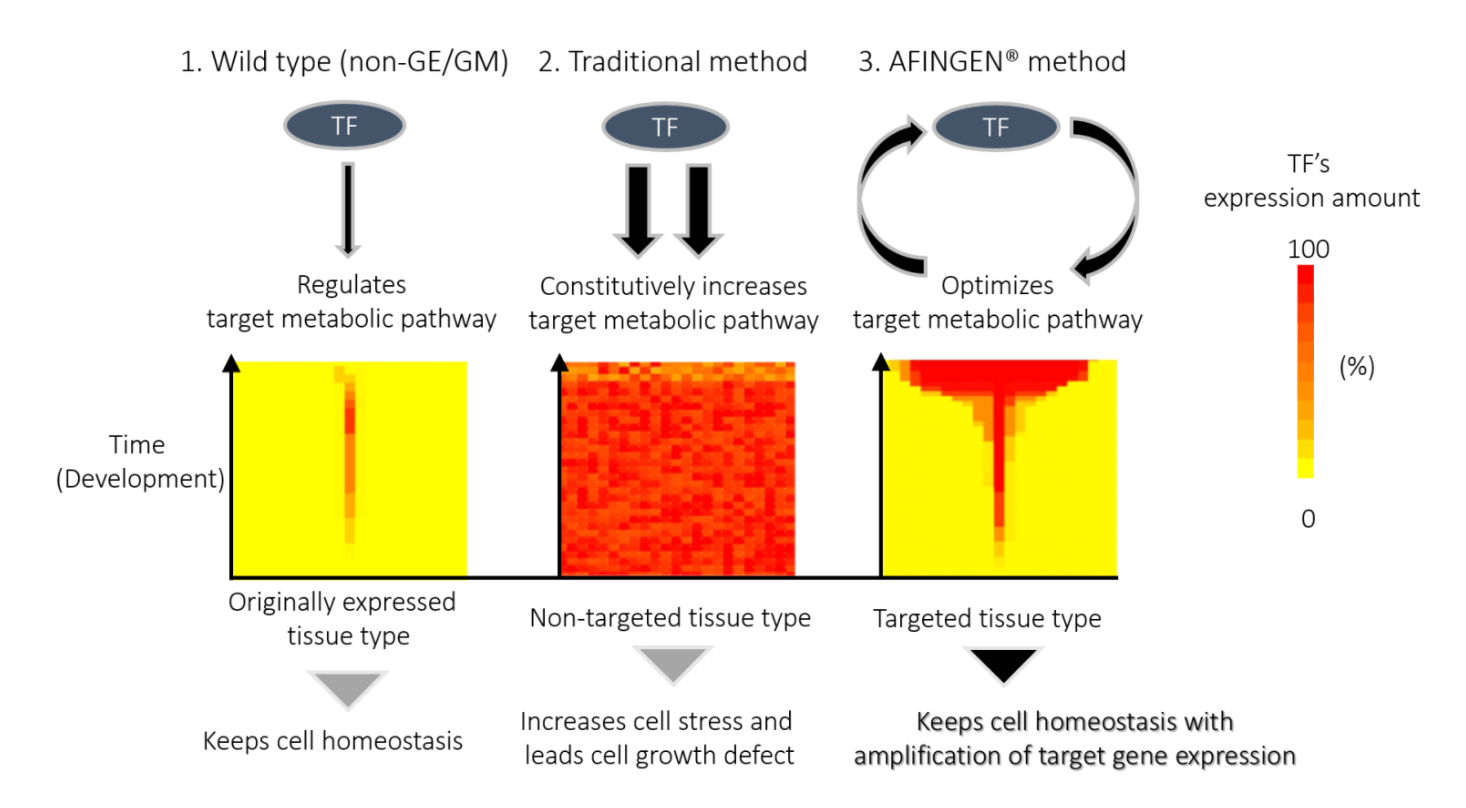
Figure: Schematic representation of the AFINGEN® APFL concept for modulating master transcription factor (TF) expression through a positive feedback loop. (1) Wild type maintains normal cellular homeostasis. (2) Constitutive manipulation of target metabolic pathways can increase cellular stress and impair growth. (3) The AFINGEN® approach is designed to amplify tissue-specific gene expression while preserving overall plant homeostasis.
Four Trait Areas Investigated
Experimental lines discussed in AFINGEN® patent materials include switchgrass, canola, and alfalfa. These patent-described experiments provide a technical foundation for evaluating APFL applications in selected crops and traits.
Crop-specific development programs can establish trait stability, performance, quality, and commercial suitability using appropriate controls and validation studies.
Crop Improvement
Growth and Biomass
Research in engineered switchgrass has examined vegetative development and biomass accumulation relative to controls. These findings provide opportunities for crop-specific development and evaluation across additional agricultural applications.
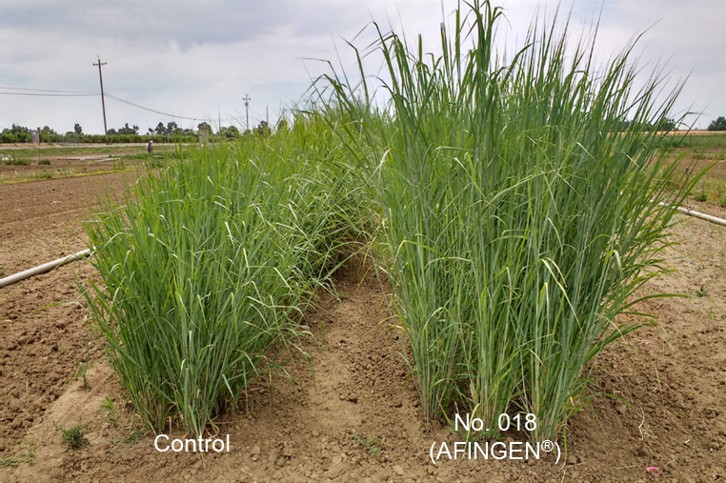
Figure: Representative switchgrass biomass from a line engineered using AFINGEN® technology. The control line contains an empty vector; the engineered line contains AFINGEN® construct No. 018. Statistical analyses of biomass yield and related traits are described in the APFL patent family, including U.S. Patent Nos. 11,613,760 and 12,203,084.
Seed & Grain Production
Seed and Grain Yield
The source experiments describe switchgrass seed and canola grain/pod observations in selected lines. These experimental findings provide a foundation for further crop-specific development and field evaluation.
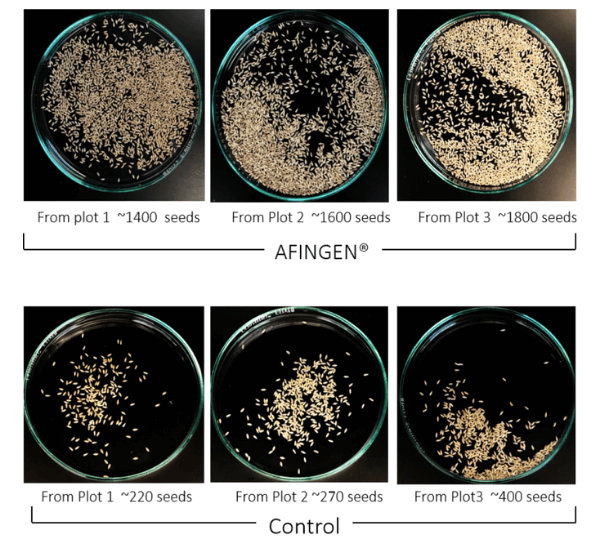
Figure: Comparison of mature seed collected from control and AFINGEN® switchgrass plants grown in a greenhouse. The six photographs show total seed collected from selected event plots. Approximately 30 plants were evaluated in each control and engineered plot. Statistical analyses of seed yield and germination-related traits are described in published patent application WO2019148193A1.
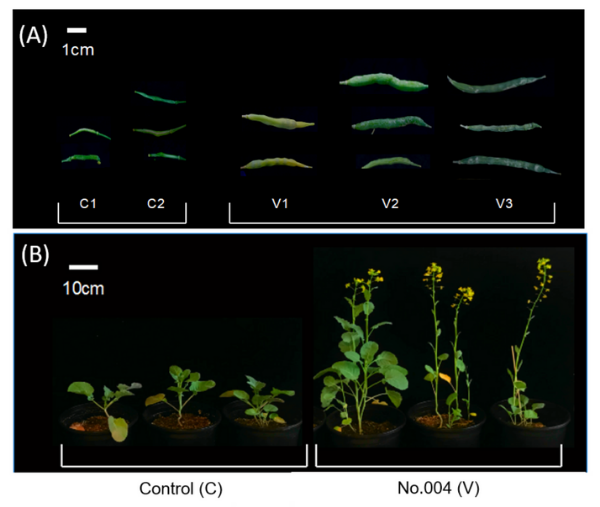
Figure: In the experiment described in published patent application WO2019148193A1, canola (Brassica napus cv. Westar) engineered with APFL construct No. 004 exhibited approximately twice the plant height of vector-control plants at 130 days after regeneration. (A) Representative grain pods from control plants (C1-2, left) compared with plants engineered using AFINGEN® construct No. 004 (V1-3, right). (B) Representative control plants (left) compared with plants engineered using AFINGEN® construct No. 004 (right). Statistical analyses of yield and related traits are described in published patent application WO2019148193A1.
Root Development
Root Development
Alfalfa research lines have been investigated for vegetative and root-development responses under experimental conditions.
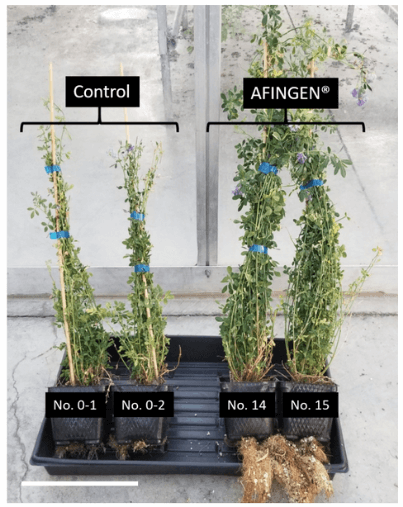
Figure: Increased vegetative tissue yield and root growth in alfalfa (Medicago sativa) engineered using AFINGEN® technology. Control lines No. 0-1 and No. 0-2 containing an empty vector are shown on the left; lines engineered with AFINGEN® constructs No. 14 and No. 15 are shown on the right. Statistical analyses of yield and root-related traits are described in published patent application WO2019148193A1.
Biomass Quality
Biomass Processability and Digestibility
APFL research has examined tissue-specific lignin and cell-wall characteristics in switchgrass. Laboratory outcomes described in the original platform and patent documentation indicate potential directions for biomass accessibility and processing.
These findings support further evaluation of biomass quality and processing applications at commercially relevant scales.
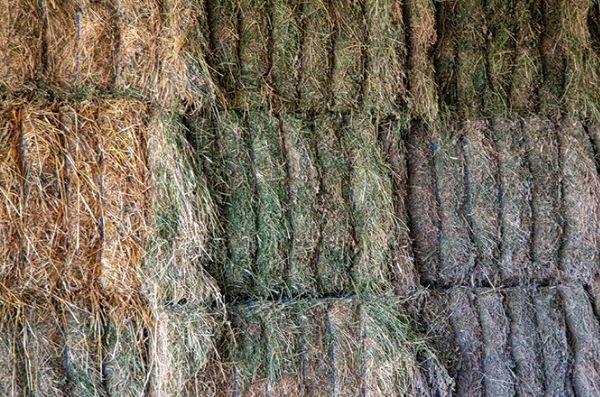
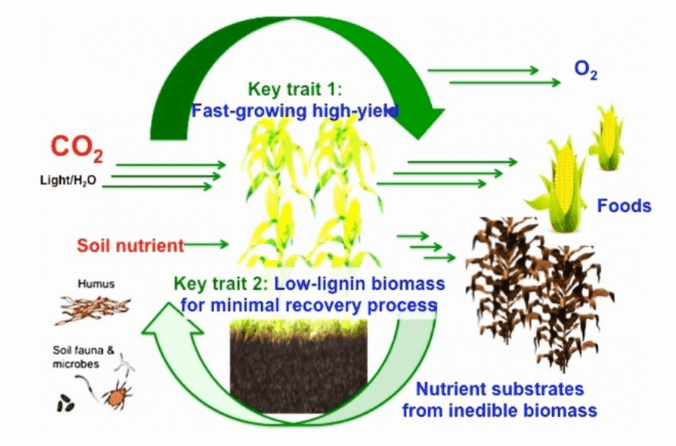
Original research context: AFINGEN® research has evaluated a plant biotechnology platform designed to modulate tissue-specific gene expression while maintaining overall plant performance. Across research-stage crop systems, observed traits have included faster growth, higher biomass or seed yield, enhanced root development, and reduced lignin in selected tissues. AFINGEN® is extending these approaches to food, feed, fiber, and fuel crops to explore applications in productivity, biomass quality, and nutrient recycling.
From Research Trait to Use Case
AFINGEN® is exploring commercial development pathways for plant lines combining productivity-related traits with suitable biomass characteristics. Priority applications include forage and feed, seed and grain production, and biomass conversion.
Commercialization programs would assess trait stability, multi-environment performance, applicable crop safety and quality requirements, and relevant regulatory pathways.
Technology Evidence & Intellectual Property
The underlying technology and selected experimental systems are described in published patent records. AFINGEN®’s issued patents and published applications establish a documented intellectual property foundation for technology development, industry collaboration, and potential licensing.
U.S. Patent 11,613,760 · U.S. Patent 12,203,084 · Published application WO2019148193A1
Published research and patent materials document AFINGEN® APFL technology across selected experimental crop systems. AFINGEN® is advancing crop-specific evaluation and commercialization opportunities through research collaboration, technology partnerships, and potential licensing arrangements.
Explore collaboration
Discuss Crop-Specific Research Applications
AFINGEN® welcomes seed companies, crop developers, agricultural technology partners, and prospective licensees to explore crop-specific research, joint development, and commercial applications of the APFL platform.